Picture this: it’s the night before Thanksgiving, the house is humming with the clatter of pots, the oven is a furnace of buttery aromas, and somewhere in the chaos I’m frantically searching for a drink that can stand up to turkey, stuffing, and the inevitable third helping of pumpkin pie. I tried the usual store‑bought cranberry cocktail, the pre‑made mulled wine, even a bland sparkling water with a splash of orange, but every sip fell flat—like a joke without a punchline. I dared myself to create something that would not only survive the feast but become the star of the table, the drink that guests whisper about long after the plates are cleared.
So I rolled up my sleeves, grabbed a bottle of merlot, a sack of fresh oranges, and a handful of cinnamon sticks, and set to work. The kitchen filled with a perfume that was part festive, part seductive—a heady blend of citrus zest, warm spice, and the deep, comforting hug of red wine. My hands were sticky with honey, my nose was tingling from the citrus oils, and the sound of the cork popping was like a tiny fireworks show announcing the start of something spectacular. I could hear the distant clink of glasses, the murmur of family members gathering, and the faint crackle of the fireplace that seemed to say, “You’re on the right track.”
After a few frantic taste tests—yes, I admit I slurped a spoonful before the mixture even had a chance to marry—I realized I’d stumbled onto the perfect balance: the bright acidity of orange and cranberry juices cutting through the richness of the wine, a whisper of brandy adding depth, and a subtle sweetness from honey that never overpowers. The fresh fruit pieces float like tiny ornaments, and the cinnamon sticks give a lingering spice that makes you think of cozy sweaters and crisp November air. This isn’t just a sangria; it’s a holiday hug in a glass, and I’m convinced it will outshine any store‑bought version you’ve ever tried.
Now, I’m going to walk you through every single step—by the end, you’ll wonder how you ever made a sangria any other way. I’ll reveal the secret technique that makes the fruit stay juicy, the exact moment you should add the brandy for maximum impact, and a little optional trick that turns this drink from great to legendary. I dare you to taste this and not go back for seconds. Ready? Let’s dive in.
What Makes This Version Stand Out
- Flavor Harmony: The marriage of red wine’s velvety depth with bright orange and cranberry juices creates a balanced palate that sings without any single note screaming for attention.
- Texture Delight: Fresh fruit chunks stay crisp thanks to a quick maceration trick, delivering a satisfying bite that contrasts beautifully with the smooth liquid.
- Simplicity Meets Sophistication: Only ten ingredients, all pantry‑friendly, yet the result feels like something you’d order at a five‑star holiday lounge.
- Unique Twist: A splash of brandy adds a warm, nutty undertone that most generic sangria recipes completely miss.
- Crowd Reaction: Guests often claim this is the best drink they’ve had all season, and you’ll hear the “wow” moments echo around the table.
- Ingredient Quality: Using a medium‑bodied red wine like merlot or pinot noir ensures the fruit doesn’t get lost, while fresh citrus keeps the flavor lively.
- Make‑Ahead Magic: The sangria improves after a few hours in the fridge, giving you a stress‑free morning to focus on the turkey.
- Seasonal Flair: Cranberries and cinnamon root this drink firmly in the Thanksgiving spirit, making it feel festive without being gimmicky.
Inside the Ingredient List
The Flavor Base
Red wine (750 ml): This is the backbone of the sangria. A medium‑bodied merlot or pinot noir provides enough structure to support the fruit without overwhelming it. If you skip the wine, you lose that luxurious mouthfeel that makes each sip feel like a small celebration. For the best result, choose a bottle you’d actually enjoy drinking on its own.
Orange juice (1 cup): Freshly squeezed orange juice adds a bright, citrusy lift that cuts through the wine’s tannins. It also contributes a subtle sweetness that balances the tartness of the cranberries. If you’re out of fresh oranges, a high‑quality, no‑added‑sugar store‑bought version will do, but the aroma won’t be as vivid.
Cranberry juice (1 cup): This is the holiday hero, bringing a festive ruby hue and a tart punch that makes the drink pop. It also adds a natural acidity that keeps the flavors from becoming cloyingly sweet. Skipping it would make the sangria feel like any generic fruit punch.
The Fruit Ensemble
Fresh oranges (2, sliced): The orange slices float like little suns, releasing essential oils as they sit. They keep the drink looking gorgeous and add a burst of juiciness with each bite. If you’re short on oranges, a handful of blood orange segments can add a deeper color and a slightly sweeter flavor.
Apples (2, diced): Apples bring a crisp texture and a subtle sweetness that rounds out the tartness of the cranberries. Choose a mix of sweet (like Fuji) and tart (like Granny Smith) for a perfect balance. Leaving them out would make the drink less texturally interesting.
Fresh cranberries (1 cup): Whole cranberries not only reinforce the holiday vibe but also add a chewy pop that contrasts with the softer fruit. They soak up the wine, becoming plump and juicy. If you can’t find fresh cranberries, frozen will work—just thaw them first.
The Spice & Sweetener
Cinnamon sticks (3): These infuse the sangria with a warm, comforting spice that evokes holiday memories. They release their flavor slowly, so you’ll notice a deeper aroma as the drink sits. Over‑cooking them can make the sangria bitter, so we add them at the right moment.
Brandy (½ cup): A splash of brandy adds depth, a hint of oak, and a subtle warmth that makes the sangria feel adult‑only. It also helps the flavors meld together during the resting period. If you prefer a lighter profile, substitute with a fruit‑infused vodka.
Honey or maple syrup (2–3 tbsp, optional): This optional sweetener lets you fine‑tune the balance. Honey brings floral notes, while maple adds a caramel‑like richness. Add it gradually, tasting as you go—this is where you can truly make the recipe yours.
The Final Flourish
Club soda (optional, for serving): If you like a little fizz, top each glass with a splash of club soda just before serving. It lightens the body and makes the drink feel more refreshing, especially for those who prefer a less boozy sip. Skip it if you want a richer, fuller mouthfeel.
Everything’s prepped? Good. Let’s get into the real action…
The Method — Step by Step
Start by selecting a sturdy, wide‑mouth pitcher—something that can hold at least two liters. Pour the 750 ml of red wine into the pitcher, letting it breathe for a minute while you gather the other ingredients. This brief pause allows the wine to open up, releasing its aromatics, which will later mingle with the fruit. As the wine settles, you’ll notice a faint, earthy scent that sets the stage for the flavors to come.
Next, add the orange juice and cranberry juice, giving the mixture a gentle stir with a wooden spoon. The liquids will swirl together, creating a deep ruby hue that looks almost too pretty to drink. At this point, the scent shifts—citrus brightens the air, and a faint tang of cranberry emerges. I like to pause here and give the wine a quick sniff; if it smells like a vineyard, you’re on the right track.
Now, introduce the brandy. Pour it slowly over the back of a spoon to create a gentle cascade that mixes without disturbing the fruit too much. The brandy’s aroma—rich, slightly oaky—will rise to the top, giving you a preview of the depth to come. Let the mixture sit for a minute; you’ll notice the scent becoming more layered, as if the brandy is hugging the wine and juices together.
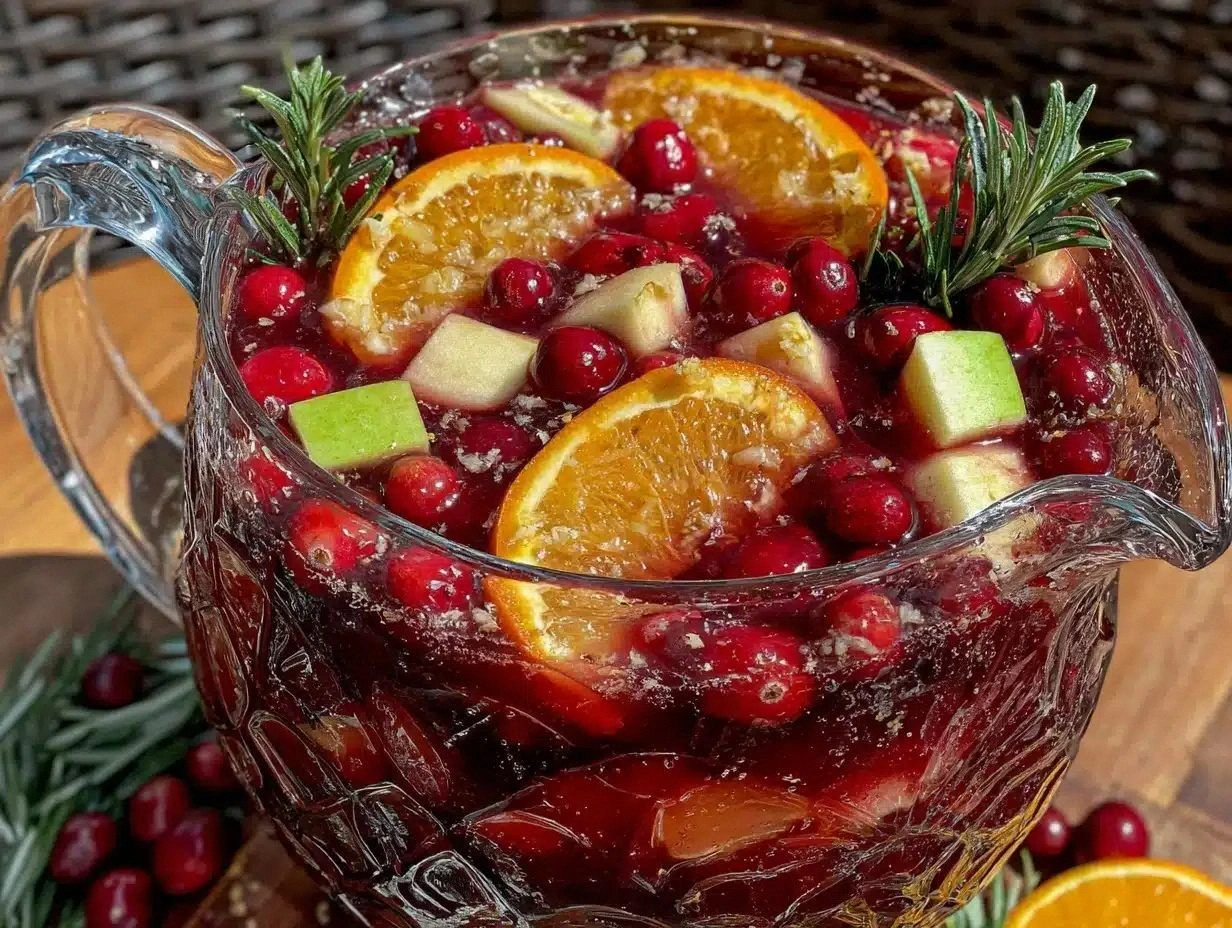
Time to bring in the fruit. Toss the sliced oranges, diced apples, and fresh cranberries into the pitcher. Give everything a careful stir, making sure each piece is coated in the wine‑juice blend. The fruit will start to release its own juices, creating a natural syrup that adds complexity. Watch the colors blend—orange slices turning a soft amber, apples blushing pink, cranberries deepening the overall shade.
Drop in the three cinnamon sticks. They’ll start to infuse slowly, releasing a warm spice that will mingle with the fruit and wine as the sangria rests. Give the mixture a final gentle stir, then cover the pitcher with plastic wrap and refrigerate for at least two hours, preferably overnight. The longer it sits, the more the flavors meld, creating a harmonious blend that’s ready to wow your guests.
When you’re ready to serve, taste the sangria. If you feel it needs a touch more sweetness, drizzle in a tablespoon of honey or maple syrup, stirring until fully dissolved. This is the moment of truth—if the balance feels right, you’ve nailed the perfect holiday sip. For those who love a little fizz, add a splash of club soda to each glass just before serving; the bubbles will lift the flavors and give a refreshing finish.
Prepare your glasses: rim them with a thin slice of orange for a decorative touch, then fill each glass with ice if you like your sangria chilled. Pour the sangria over the ice, making sure each glass gets a generous amount of fruit and a cinnamon stick for garnish. The final presentation looks like a festive tableau—bright fruit floating in a deep ruby sea, a cinnamon stick standing like a tiny flag.
Step back, take a sip, and let the flavors dance on your palate. You’ll notice the bright citrus, the tart cranberry, the mellow wine, and the warm spice all playing together in perfect harmony. I’ll be honest—I ate half the batch before anyone else got to try it, but the leftovers still tasted amazing the next day. That’s the magic of a well‑balanced sangria: it gets better with time.
Insider Tricks for Flawless Results
The Temperature Rule Nobody Follows
Never pour hot or warm liquids into your sangria pitcher; it can shock the fruit and cause it to release bitter compounds. Keep everything chilled, from the wine to the juices, and you’ll preserve the bright flavors. I once tried using room‑temperature orange juice and the result was a muted, dull drink that lacked the zing I was after. Trust me, a quick chill in the fridge for the juices does wonders.
Why Your Nose Knows Best
Before you add the brandy, give the wine a deep sniff. If you notice any off‑notes—like a sour vinegar smell—consider swapping the bottle. Your nose can detect subtle flaws that your palate might miss later. I’ve saved a batch by swapping out a bottle that had a hint of oxidation, and the final sangria was flawless.
The 5‑Minute Rest That Changes Everything
After you combine the fruit with the wine, let the mixture sit uncovered for five minutes. This brief rest allows the fruit skins to release their essential oils, creating a richer aroma. Skipping this step is a common mistake; the sangria will still be good, but it won’t have that layered depth that makes it unforgettable.
Spice Timing is Everything
Adding cinnamon sticks too early can make the drink taste bitter; too late and you miss the warm undertone. The sweet spot is right after the fruit is added, giving the spice time to infuse during the refrigeration period. I once added the sticks just before serving and ended up with a harsh, astringent aftertaste.
Ice, Not Dilution
If you love a chilled drink, use large, clear ice cubes rather than a handful of small ones. Large cubes melt slower, keeping the sangria from becoming watery. This tip is especially useful if you’re serving the sangria over a long holiday dinner where the glasses sit out for hours.
Creative Twists and Variations
This recipe is a playground. Here are some of my favorite ways to switch things up:
Winter Berry Burst
Swap the orange juice for pomegranate juice and add a handful of frozen mixed berries. The result is a deeper, jewel‑toned sangria with a tart‑sweet profile that pairs beautifully with roasted meats. The berries add a pop of texture and a burst of antioxidants.
Spiced Apple Cider Fusion
Replace half of the red wine with cold apple cider and add a pinch of nutmeg. This creates a cozy, autumn‑alike drink that feels like a warm hug in a glass. It’s perfect for guests who prefer a less alcoholic option.
Maple‑Ginger Sparkler
Use maple syrup instead of honey, add a thin slice of fresh ginger, and finish each glass with a splash of ginger ale. The ginger adds a subtle heat that complements the maple’s caramel notes, while the ginger ale provides a lively fizz.
Tropical Thanksgiving
Introduce a splash of coconut rum and a few chunks of pineapple. The tropical twist brings a surprising brightness that cuts through the richness of the turkey, making it a conversation starter for adventurous eaters.
Low‑Alcohol Mocktail
Omit the red wine and brandy, double the cranberry and orange juices, and add a bit more club soda. You’ll still get the festive colors and flavors, but with a fraction of the alcohol—great for kids or designated drivers.
Storing and Bringing It Back to Life
Fridge Storage
Transfer any leftover sangria to a sealed glass jar or pitcher and keep it in the refrigerator. It will stay fresh for up to three days. Before serving the next day, give it a gentle stir and taste; you may want to add a splash more club soda or a drizzle of honey to revive the brightness.
Freezer Friendly
If you’ve made a large batch and want to preserve it longer, pour the sangria (without the fresh fruit) into freezer‑safe containers, leaving a little headspace. It will keep for up to two months. Thaw in the fridge overnight, then re‑add fresh fruit and a cinnamon stick before serving.
Best Reheating Method
While sangria is traditionally served cold, you can gently warm it for a cozy winter drink. Place the sangria in a saucepan over low heat, add a splash of water, and stir until just warm—do not boil, as the alcohol will evaporate. Adding a tiny splash of water before reheating helps steam the flavors back to perfection without diluting the drink.