I still remember the first time I made apple cider braised pork shoulder—the kind of memory that’s seared into your brain like a brand on a steak. It was one of those drizzly November Saturdays when the sky couldn’t decide if it wanted to rain or just sulk, and I was stuck indoors with a cut of pork shoulder I’d bought on impulse because it was "too cheap to pass up." My original plan? Some kind of slow-cooker thing I’d half-read on the back of a jar of barbecue sauce. But then I spotted the jug of fresh apple cider I’d picked up at the farmers market, the one that still had flecks of orchard floating in it like tiny golden rafts, and something primal clicked. What if I traded the sickly sweet bottled sauce for the earthy, tangy depth of cider? What if I let the pork swim in it for hours until the meat gave up its stubbornness and turned into something that could be shredded with a harsh stare?
Three hours later, my kitchen smelled like a harvest festival making out with a campfire—smoke, fruit, caramel, and that heady perfume of meat that’s given up all its secrets. The windows were fogged, the cat was yowling for scraps, and I was standing over the Dutch oven with a fork in one hand and a dishtowel clutched to my chest like a security blanket. I pulled a strand of pork, and it fell apart in slow motion, the fibers sighing apart like old velour. One taste and I did that involuntary knee-bend thing—the universal human gesture for “dear heavens, I just nailed it.” I didn’t even bother with plates; I stood at the counter and ate straight from the pot, burning my tongue and not caring, swiping bites through the mahogany sauce that tasted like autumn reduced to a glossy syrup.
Here’s the kicker: most braised pork recipes treat cider like a polite guest—add a splash for “a hint of apple.” That’s adorable, but we’re not making potpourri. We’re making dinner that will haunt your dreams in the best way. My version braises the shoulder in a whole quart of reduced cider, bolstered by mustard, miso for umami depth, and a whisper of chipotle for smoke. The result is meat so succulent it practically apologizes for existing, lacquered in a sauce that walks the tightrope between sweet, tart, and savory so confidently it should join the circus. If you’ve ever struggled with dry pulled pork or one-note sweetness, you’re not alone—and I’ve got the fix.
Picture yourself pulling this out of the oven four hours from now: the pot lid rattles like it’s trying to escape, the sauce burbles like a witches’ cauldron, and the meat winks at you through the steam as if to say, “Told you we could do this.” Your neighbors will suddenly need to borrow sugar they’ll never return. Your kids will abandon their devices. Your picky brother-in-law will ask for the recipe and then act like he always knew cider was the secret. Stay with me here—this next part is pure magic.
What Makes This Version Stand Out
Cider-Forward: Instead of timid tablespoons, we reduce an entire quart of fresh, unfiltered cider until it’s syrupy, concentrating the orchard’s perfume into a powerhouse of flavor that seeps into every fiber of the pork. Most recipes stop at “fruity background note”; we make cider the headliner.
Umami Bomb: A single tablespoon of white miso melts into the braise and disappears, leaving behind a bass-note savoriness that makes people ask, “Why does this taste like it aged in a steakhouse?” It’s the culinary equivalent of a secret handshake.
Texture Tango: First we sear the shoulder until the fat cap crackles like pork-candy glass, then we slow-braise until the collagen converts to gelatin, and finally we blast it under the broiler to re-crisp the bark. You get the tug of pulled pork with the snap of carnitas—no compromise.
One-Pot Wonder: No secondary skillets, no straining, no fancy gear. If you’ve got a Dutch oven and patience, you’re in business. Cleanup is basically hot water and a sigh of relief.
Weekend Friendly: Start it after Saturday morning coffee; it’s ready by kickoff. Or park it in the fridge overnight and reheat Sunday—the flavor actually improves, like a stew that went to grad school.
Crowd Calculus: One 4-pound shoulder feeds six generous plates or eight polite ones, and it scales like a dream for game-day chili, taco bars, or that office potluck where you secretly want to outshine Cheryl from accounting.
Leftover Gold: The sauce solidifies into a jelly that’s incredible melted over roasted vegetables, stirred into beans, or slathered on a grilled cheese. I’ve honestly caught myself eating it cold by the spoonful at 2 a.m.—no regrets.
Inside the Ingredient List
The Flavor Base
Fresh, unfiltered apple cider is the soul of this dish. Skip the clear, shelf-stable stuff in juice boxes—what you want is the cloudy, unfiltered liquid that still has apple sediment dancing in it. When reduced, it concentrates natural sugars and malic acid, creating a glaze that tastes like caramel apples grew up and got a mortgage. If you absolutely must substitute, use cloudy apple juice plus two tablespoons of lemon juice for brightness, but know that you’re trading a Steinway for a keyboard.
Yellow mustard isn’t just ballpark nostalgia here; its vinegar and turmeric cut through richness and add a gentle heat that blooms in the background. Don’t reach for Dijon unless you want a sharper, wine-y edge that can bully the cider. And whatever you do, don’t skip the mustard entirely—without it the braise can cloy like candy apples at the state fair.
The Texture Crew
Pork shoulder, a.k.a. Boston butt, is a marathon runner of a cut: tough and collagen-rich, but given time and liquid it melts into spoon-tender threads. Look for one with a thick fat cap; that layer renders and self-bastes the meat from above. If your butcher offers bone-in, grab it—the bone adds gelatin and flavor, plus you get to wield it later like a caveman trophy. Four pounds sounds massive, but it shrinks by almost half, and leftovers are currency.
Onions go in thick wedges so they hold up during the long braise, emerging silky and sweet, almost apple-like themselves. I use plain yellow onions because they’re cheap and reliable, but if you’ve got sweet Vidalia in season they add a layer of candy-shop perfume. Don’t dice them fine or they’ll dissolve into mush and rob you of those luscious onion-buttery bites.
The Unexpected Star
White miso paste is my not-so-secret weapon. A single tablespoon adds glutamates that make the pork taste like it was dry-aged for weeks. It dissolves into the sauce, so no one will pinpoint it, but they’ll keep asking why your cider pork tastes deeper than theirs. Store leftover miso in a sealed tub in the freezer; it keeps indefinitely and is killer whisked into salad dressings or mashed potatoes.
Chipotle in adobo brings smoke without turning the dish into barbecue karaoke. One pepper, minced fine, perfumes the entire braise with campfire intrigue. If you’re heat-shy, seed the pepper first, but don’t skip it—smoke is the bridge between pork and apple that makes people close their eyes involuntarily when they eat.
The Final Flourish
Apple cider vinegar added at the end acts like a high-note violin at the end of a symphony—everything else is rich and bass-heavy, and the vinegar lifts the entire dish into focus. Add it off-heat so the volatile acids don’t cook off. Taste, then add more if you want; the sauce should make your mouth water, not pucker.
Fresh thyme leaves look pretty sprinkled on top, but they also echo the woodsy undercurrent in the cider. Strip leaves off three or four sprigs and scatter just before serving so the herbs stay vibrant. Dried thyme works in a pinch, but use half the amount and add it during braising so the dried herb rehydrates.
The Method — Step by Step
-
Pat the pork shoulder absolutely dry with paper towels—any surface moisture will steam instead of sear, and we want the Maillard reaction singing. Season aggressively with kosher salt and cracked black pepper; think “snowstorm on a country road.” Heat a Dutch oven over medium-high until a drop of water skitters like mercury, then add a thin film of oil. Lay the meat fat-side-down and walk away for four full minutes. Seriously, no poking. When the fat renders and the underside is the color of antique mahogany, rotate and brown every side, including the skinny edges. Your kitchen will smell like a bacon parade—embrace it.
-
While the pork browns, pour the cider into a saucepan and bring to a hard boil. Let it reduce from a quart to two cups; it will look like liquid topaz and bubble like lava. This step burns off water and intensifies flavor, so the eventual braise tastes of cider, not watered-down applesauce. Skim off any pale foam that rises—those are impurities that can muddy the sauce. Reduce heat to low and whisk in the miso until it disappears. Congratulations, you just made cider espresso.
-
Transfer the browned shoulder to a plate. Pour off all but two tablespoons of fat from the Dutch oven—save those glorious drippings for roasting potatoes later. Toss in the onion wedges and let them pick up the browned fond, scraping with a wooden spoon. When the edges blister and caramelize, add the chipotle and let it sizzle for thirty seconds. Your nose will tingle; that’s capsaicin meeting pork fat, and it’s heavenly.
-
Pour the reduced cider-miso mixture into the pot, followed by chicken stock until the liquid comes halfway up the side of the onions, not the pork—we’re braising, not boiling. Stir in mustard, bay leaves, and a crack of black pepper. Return the shoulder, fat-cap-up, nestling it like a king on a savory throne. The top should peek above the liquid so it self-bastes; add more stock only if needed.
-
Clamp on the lid and slide the pot into a 325°F oven. Now we wait. After the first hour, the kitchen will smell like applewood-smoked dreams. After the second, the meat starts relaxing. At hour three, peek: if the fork meets resistance, re-lid and give it another thirty. When it’s ready, the fork slides in like a hot knife into frosting and the shoulder jiggles like it’s laughing at a private joke.
-
Carefully transfer the shoulder to a rimmed baking sheet—it will want to fall apart, so support from below with spatulas. Crank the oven to 425°F. Ladle off excess fat from the sauce, then simmer the liquid on the stovetop until it naps the back of a spoon. Adjust salt, then paint some of this glaze over the pork and slide the sheet under the broiler for five to seven minutes, basting twice, until the exterior caramelizes into sticky, lacquered shards. This is the moment of truth: crispy shell giving way to buttery interior.
-
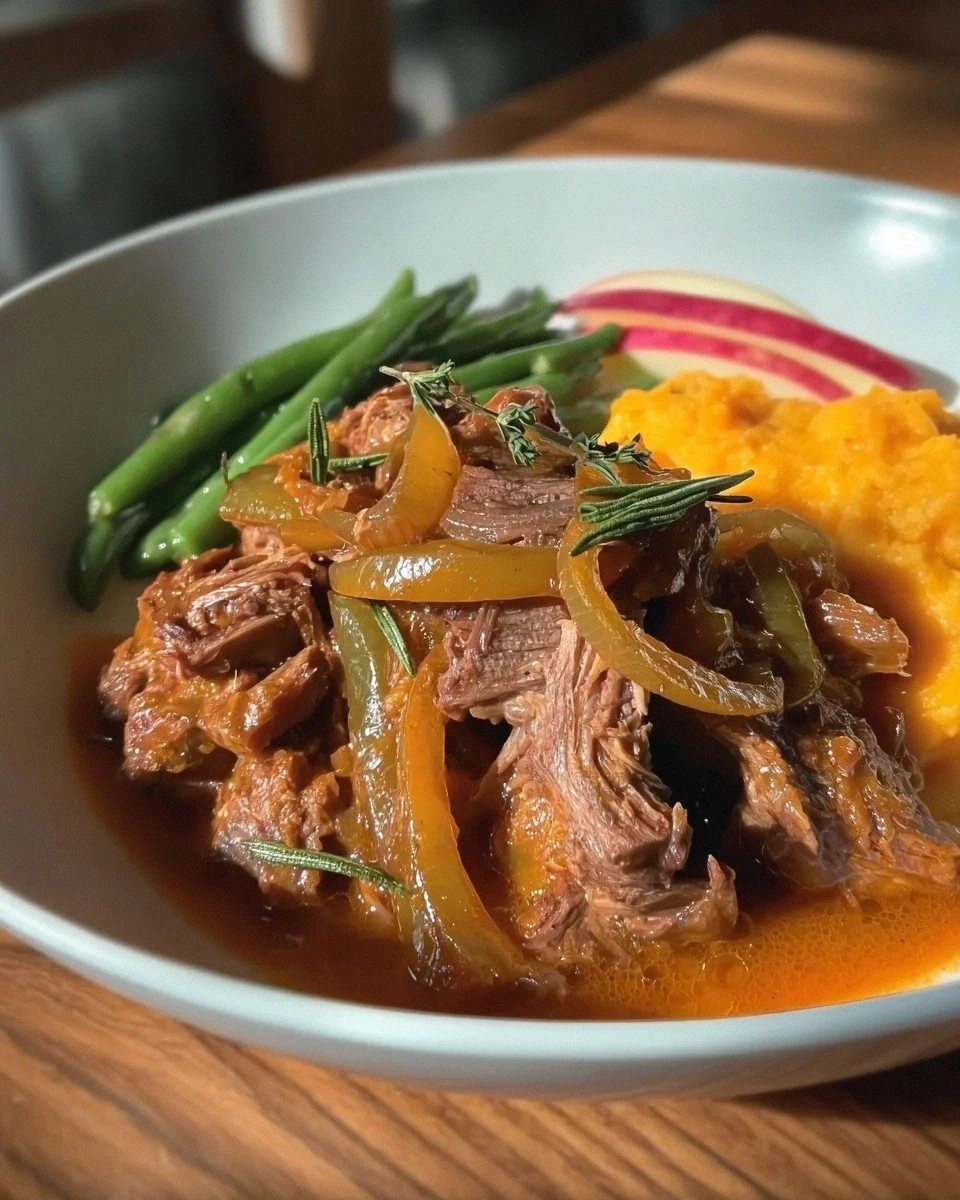
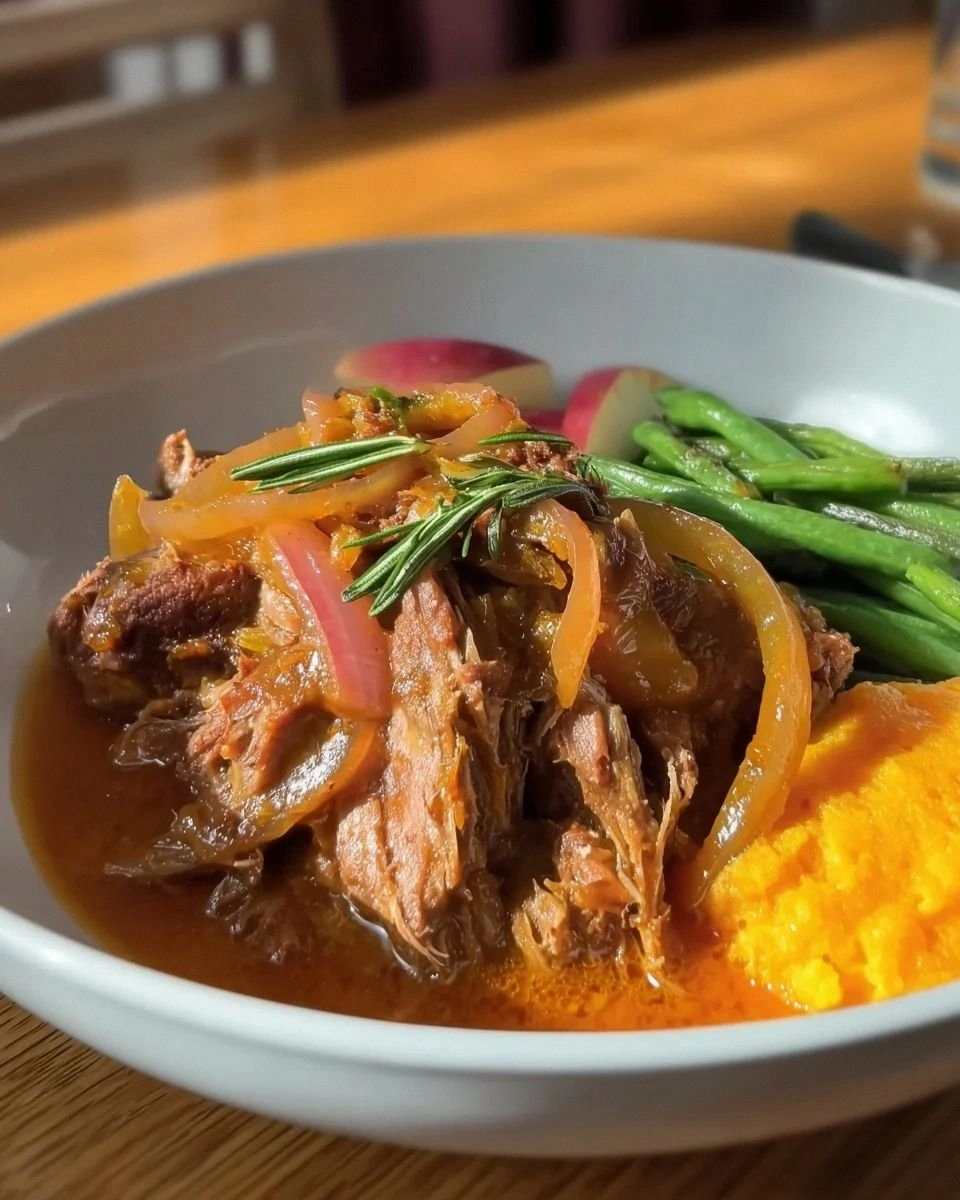
Rest the pork for ten minutes—just enough time to pour yourself a glass of the remaining cider. Shred with two forks into chunky, juicy strands, discarding any large fat caps (or snack on them, no judgment). Return meat to the reduced sauce, folding until every fiber is coated in glossy mahogany. Finish with a splash of cider vinegar and scatter fresh thyme. Serve hot, preferably in a shallow bowl that lets the sauce pool like a delicious oil spill.
That’s it—you did it. But hold on, I’ve got a few more tricks that’ll take this to another level...
Insider Tricks for Flawless Results
The Temperature Rule Nobody Follows
Most recipes say “cook until tender” and leave you hanging. Here’s the real metric: when an instant-read thermometer plunged into the thickest part registers 200–205°F, the collagen has fully converted to gelatin and the meat will pull apart effortlessly. Anything under 195°F and you’ll fight stringy resistance; over 210°F and the fibers collapse into mush that tastes like cafeteria tuna. Trust the numbers, not the clock.
Why Your Nose Knows Best
During braising, the scent evolves in three acts: first bright apple, then sweet pork, finally deep caramel. When it switches from fruity to meaty-sweet, you’re about an hour out—set a reminder to check doneness. If your kitchen suddenly smells like Sunday morning bacon, congrats, you’ve hit the broiler jackpot window. Ignore those olfactory cues and you risk drying out the goods.
The 5-Minute Rest That Changes Everything
After shredding, let the pork sit in the hot sauce off-heat for five minutes. The fibers drink up liquid like parched tourists, plumping and glossing. A friend once skipped this step and served immediately; the result was tasty but slightly soupy. Give it the spa moment and the texture transforms from wet to juicy-yet-cohesive.
Creative Twists and Variations
This recipe is a playground. Here are some of my favorite ways to switch things up:
Smoky Maple Bourbon Edition
Swap half the cider for dark maple syrup and add a shot of bourbon to the braise. The alcohol cooks off, leaving smoky vanilla notes that pair ridiculously well with the chipotle. Finish with a drizzle of maple for a glossy sheen that screams Canadian campfire.
Asian Orchard Fusion
Replace miso with gochujang for spicy depth, swap thyme for cilantro, and add a knob of ginger to the onions. Serve tucked into steamed bao buns with quick-pickled daikon. Your guests will wonder when you opened a Korean street-food truck.
Harvest Breakfast Hash
Chop leftover pork and crisp it in a skillet with diced potatoes, Brussels sprout leaves, and a splash of the sauce. Top with a runny fried egg and call it brunch. The sweet-savory pork plus yolk equals hangover kryptonite.
Cider-Chile Ramen
Shred the pork into rich chicken stock, add a spoon of the braising sauce, and ladle over noodles. Top with scallions and a drizzle of chili oil. It’s like autumn decided to backpack through Tokyo.
Apple Pie Tacos
Mix shredded pork with a touch of applesauce and cinnamon, pile into warm tortillas, and garnish with jicama slaw. Sounds weird until you taste it—then it tastes inevitable.
Vegetarian Umami Swap
Use halved heads of cauliflower seared and roasted the same way, substituting mushroom stock for chicken. The cider-miso glaze still works magic, and vegetarians will nominate you for sainthood.
Storing and Bringing It Back to Life
Fridge Storage
Cool the pork in its sauce, then transfer to airtight containers. It keeps five days refrigerated, though honestly it never lasts that long in my house. Store sauce and meat together so the fibers stay lubricated; separating them risks dried edges that even microwaves can’t resuscitate.
Freezer Friendly
Portion into quart freezer bags, press out excess air, and freeze flat for up to three months. Thaw overnight in the fridge or submerge the sealed bag in cold water for quick defrost. The sauce may separate slightly—just whisk back together while reheating.
Best Reheating Method
Low and slow is the mantra. Warm in a covered skillet with a splash of water or broth over medium-low, stirring occasionally until heated through. Microwave works in a pinch, but add a damp paper towel on top to create steam. Add a final drizzle of cider vinegar to wake up flavors that hibernated in the cold.